
Bees
Promoting Beneficial Pollinators
in the Garden
One of the best things we can do is make sure there is enough food for our Kiwi bees. We can do this by planting ‘bee friendly’ plants; in our gardens, on our farms, in our public gardens and even along our roadside.
Facts
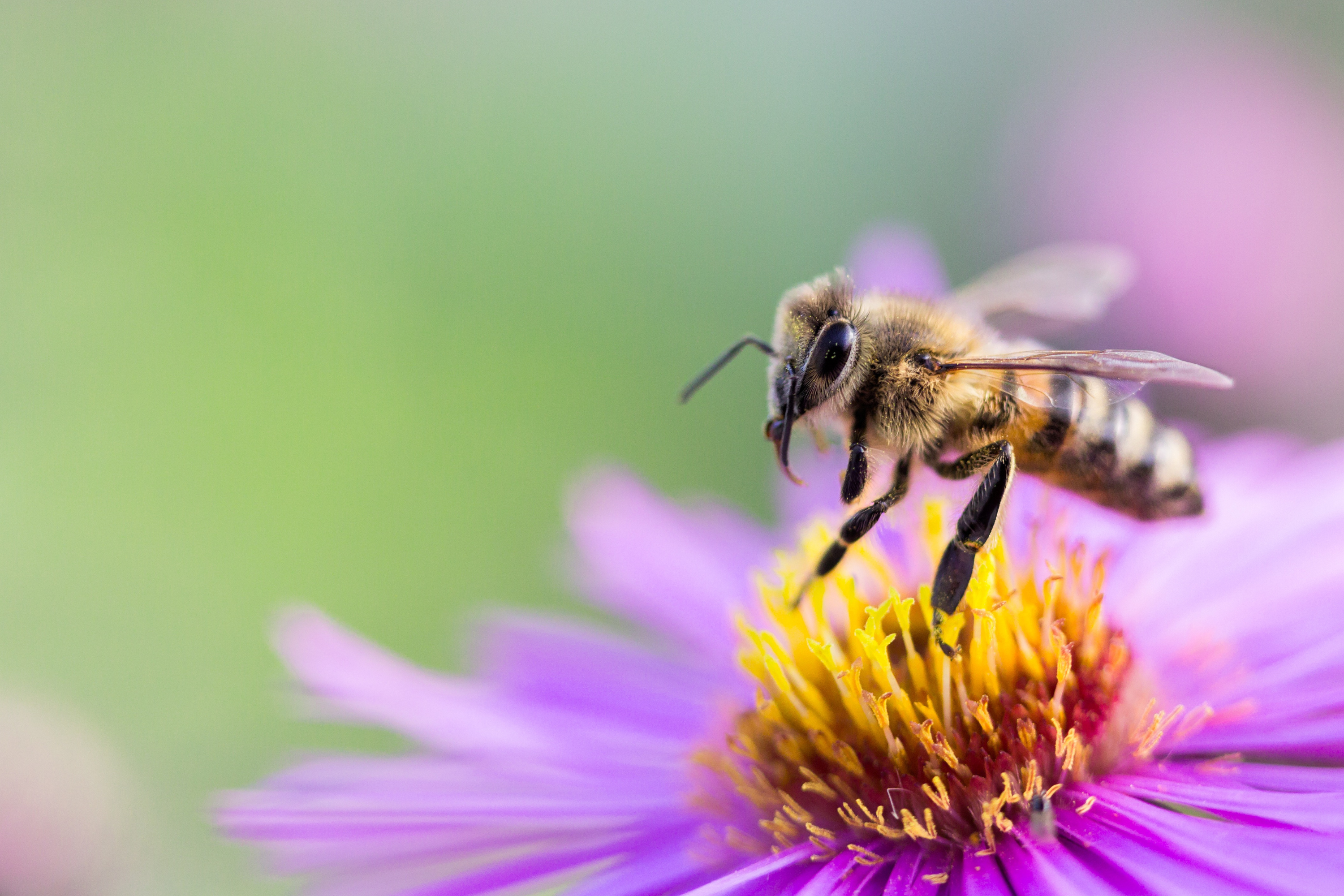
- Roughly one third of everything we eat is pollinated by bees. Many of our crops would not be viable without bee pollination – with an important role also played by bumble bees. Orchardists pay for hives to be located on their properties.
- Honey bees usually fly up to 2.4kms in one excursion for pollen and nectar, but some travel 12kms visiting up to 100 flowers and reaching speeds of 24km/h.
- To make a pound of honey, a bee would need to visit 3.3 million flowers or travel around the globe three times.
- The average worker bee makes just 1/12 of a teaspoon of honey and travels 800km in their four to eight weeks lifetime.
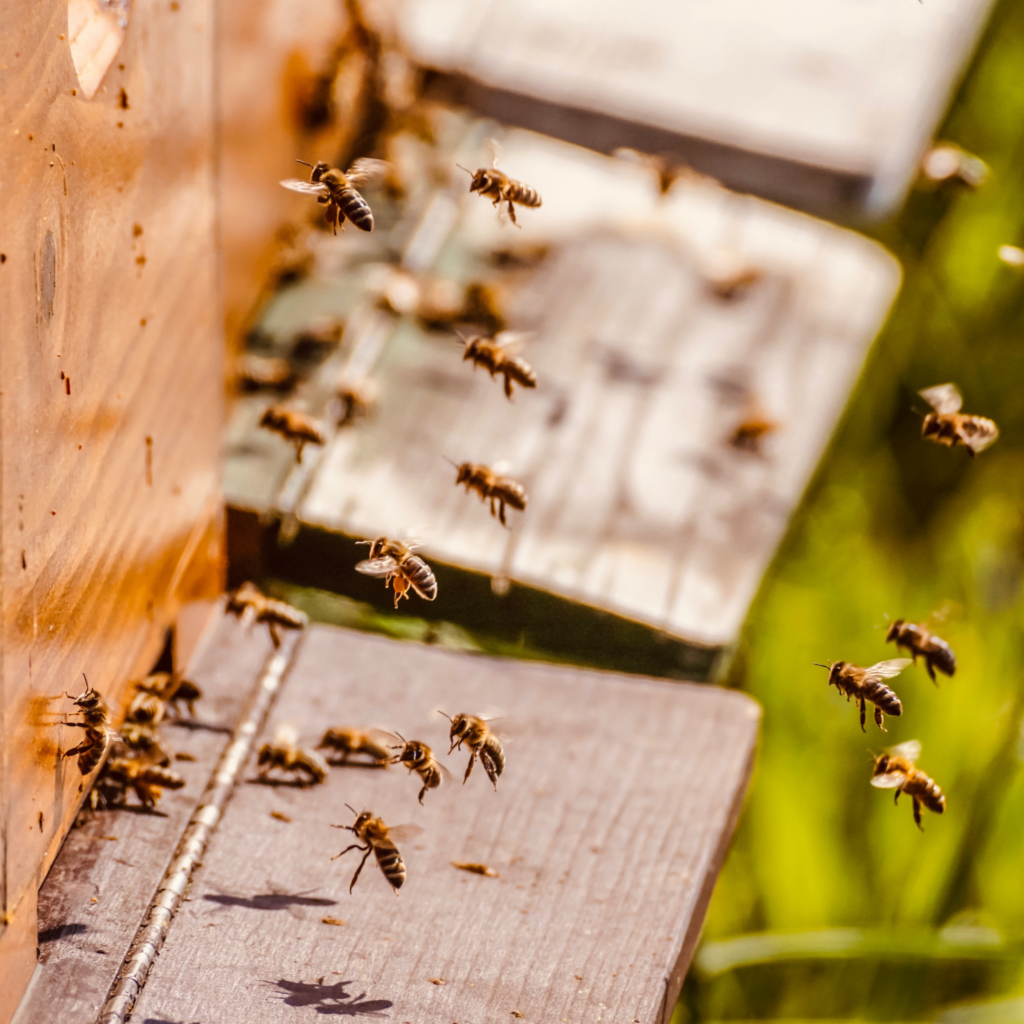
- In an average beehive during the summer months, you can expect to find one queen bee, 250 drones, 60,000 worker bees, 7,000 eggs, 10,000 larvae and 20,000 pupae.
- Some bees dance while in the air to spread the word about a good source of nectar.
Native Bees
While honey bees are beneficial for our horticultural system, native bees are essential for Aotearoa’s ecological system and should not be forgotten.
Loss of habitat, herbicides, insecticides, and the growing competition for resources from other non-native bee species has native bees under threat.
About Native Bees:
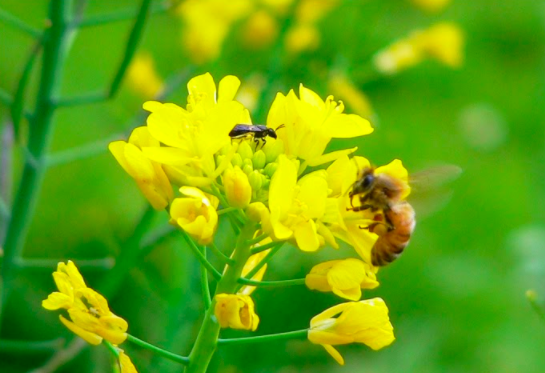
- Smaller than honey bees and primarily black in colour.
- Non-aggressive and very rarely sting.
- Primarily solitary, with some species forming small family nests of a few individuals.
- Form nests in small holes underground or in crevices of plants.
- Have a much shorter travel range, usually less than 100m.
- Feeds on native plants and prove to be the most effective pollinators for pohutukawa, manuka, and kanuka.
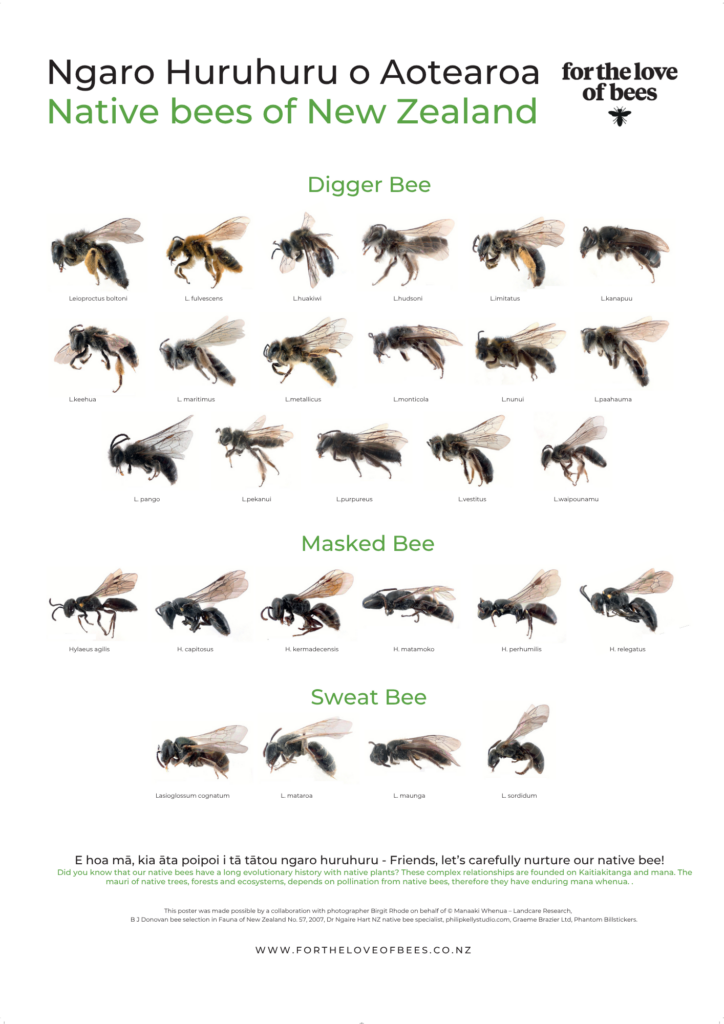
For more on native bees, start with resources from For The Love of Bees.
Where are all the bees gone?
- Chemicals
- Invasive parasites
- Decline in nectar-rich plants.
A combination of the above and climate change is endangering the bees, so if you like to eat, it’s time to make some changes, to step up and lend the bees a hand.
How can I help?
We can all make some small changes in how we treat our patch of dirt, whether it’s a large patchwork of paddocks, the ¼ acre paradise or a prized patio.
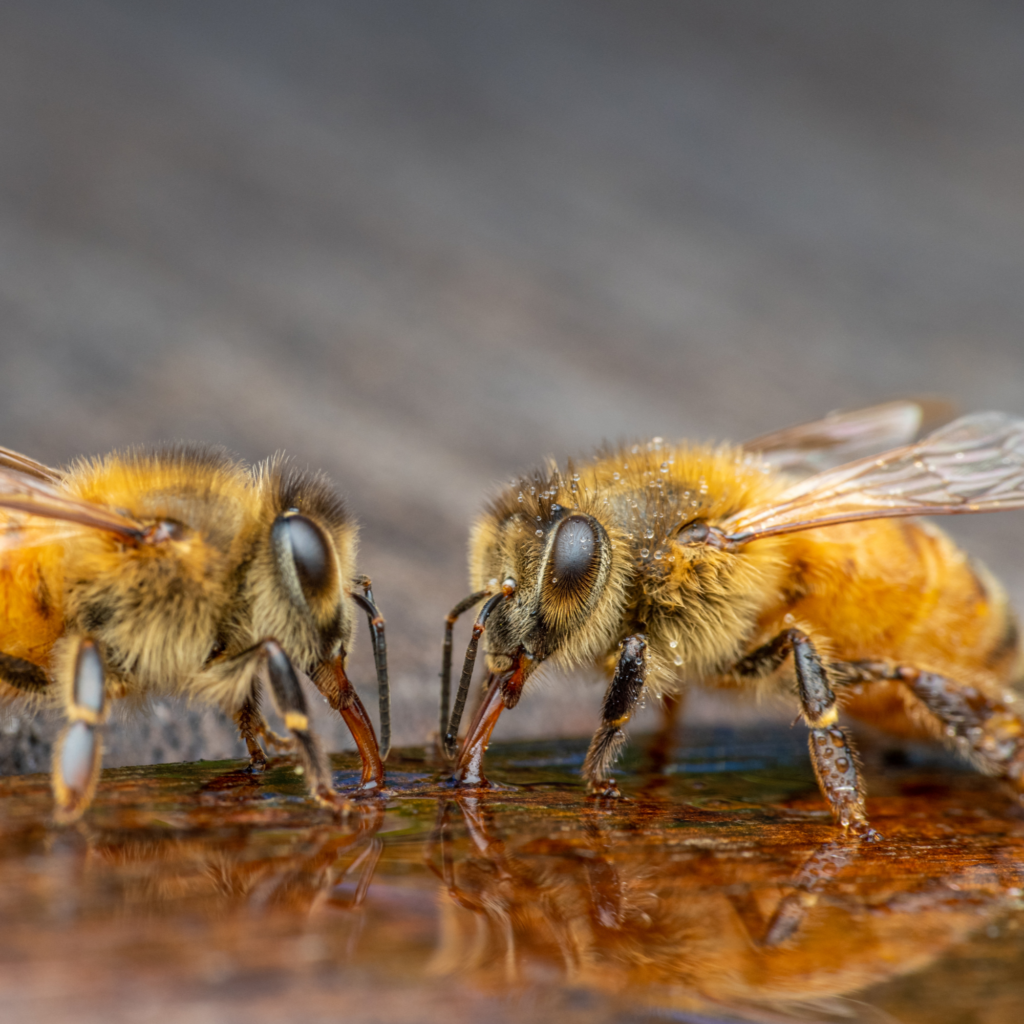
- Provide fresh, pesticide-free drinking water for bees in a shallow dish. Fill with pebbles to prevent drowning.
- Limit chemical sprays and use them first thing in the morning or evening once bees have gone to bed and don’t spray the flowers where possible.
- Provide housing such as bee & bug hotels for bees to shelter and nest in.
- Many of our native bees burrow and nest underground and within piles of debris. Consider leaving piles of leaves and mulch in your garden to provide haven for these, plus other beneficial insects.
- Provide a wild garden, there are some great seeds available to scatter for a meadow garden. Wild gardens are one of the best ways to cater for the bees and also create a natural environment for other good insects.
- Plant nectar-rich plants and plant in groups – like a welcome mat for bees.
- Choose single flowering varieties. They produce more nectar and are easier for bees to access.
- Don’t forget to plant plenty of New Zealand natives such as manuka, pohutukawa, kowhai, and hebes to help our own native bees out!

The Good Stuff
For nectar production there are six families of plants that are outstanding:
- Rosaceae – all stone and pip fruits, blackberry, hawthorn, strawberries, flowering cherries etc.
- Fabaceae – clovers, gorse, false acacia, mimosa, sweet peas, beans etc.
- Lamiaceae – rosemary, lavender, sage and other salvias, thyme, mint, bee balm, basil, catmint etc.
- Scrophulariaceae – koromiko, penstemons, veronicas/hebes etc.
- Brassicaceae – brassicas such as cabbage, broccoli, cauliflower, rocket, pak choi, etc.
- Asteraceae – dandelion, sunflower, dahlias, heleniums, cosmos, echinacea, zinnia etc.
Other important plant families as sources of nectar:
- Myrtaceae – Eucalyptus, pohutukawa, rata, bottlebrush, manuka etc.
- Ericaceae – Heather
- Rutaceae – Citrus